Torsion vs Extension Garage Door Springs: Which Does Your Door Use?
Understand the difference between torsion and extension garage door springs, how they work, and which type is right for your Green Valley home.
Eddie
March 6, 2026
We answer one critical question every single day. Torsion vs Extension Garage Door Springs: Which Does Your Door Use?
Homeowners rarely think about their garage door springs until a loud bang leaves their car trapped inside the garage. The very first step to fixing the problem is identifying your current hardware setup.
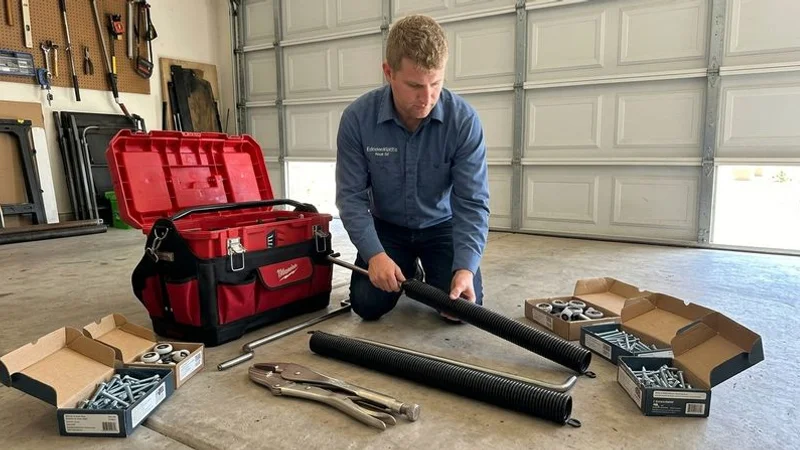
Our team at Green Valley Garage Door Repair, a locally owned and operated professional garage door service in Green Valley, replaces both torsion and extension systems daily. That exact question dictates the repair cost, the replacement parts, and the safety measures required.
We will outline the data on lifespan, analyze 2026 US pricing trends, and review the mechanical differences between these setups. Let’s look at the data, what it actually tells us, and explore a few practical ways to respond to a broken spring.
Torsion Springs: The Modern Standard
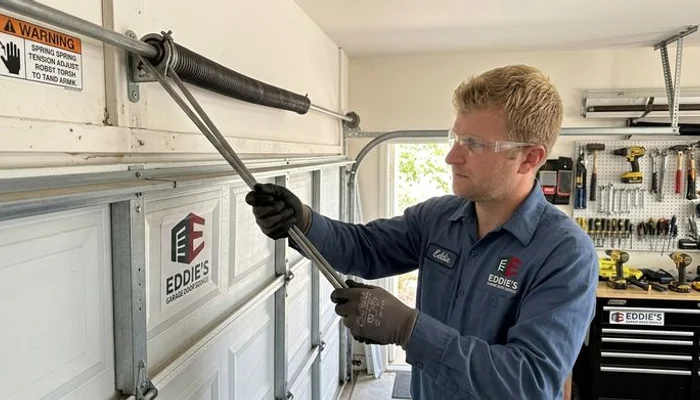
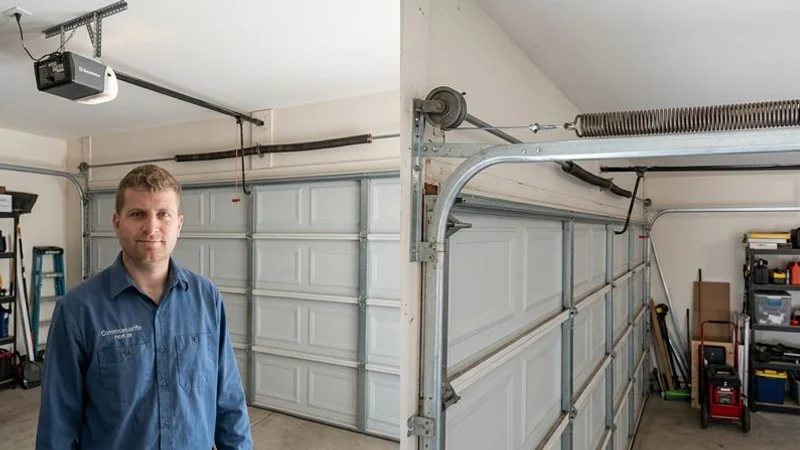
Most modern residential garage doors built in the last 20 years utilize torsion springs. We find this heavy-duty design mounted on a metal shaft directly above the garage door opening.
It is the absolute standard for all new US garage door installations today. This centralized placement allows the system to evenly distribute the massive weight of the door.
How Torsion Technology Operates
Our technicians know these mechanics rely entirely on twisting torque. Closing the door winds the spring tighter.
Storing rotational energy within the high-carbon steel creates the lifting power. We watch that stored energy unwind to seamlessly lift the panels when you open the door.
Cables attached to drums at each end of the shaft translate the spring’s rotational force into a smooth lifting motion. This clever design drastically reduces the physical strain placed on the tracks and rollers.
| Feature | Standard Torsion Spring | High-Cycle Torsion Spring |
|---|---|---|
| Average Lifespan | 10,000 Cycles | 15,000 to 20,000 Cycles |
| Estimated Years | 5 to 7 Years | 10 to 14 Years |
| Best Application | Low-traffic, single-car garages | Busy homes using the garage as the main entry |
We rely on the cycle ratings established by the Door & Access Systems Manufacturers Association (DASMA) to gauge these lifespans. A cycle represents one full opening and closing motion.
Families using their garage as a front door can easily exhaust a standard spring in seven years.
The Torsion Advantage
Our customers appreciate that safety remains the biggest selling point for this modern hardware. The broken pieces stay safely wrapped around the central steel shaft if the metal snaps under extreme tension.
Reviewing the 2026 pricing data helps set realistic budget expectations. We advise homeowners that a professional garage door spring replacement currently averages between $250 and $450 in the US.
The final price tag depends heavily on the door weight and the specific cycle rating chosen. Key benefits include several major operational upgrades.
- Controlled Balance: The twisting motion provides smoother door movement.
- Reduced Wear: Centralized lifting mechanics place far less strain on the panels.
- Contained Failures: A safer failure mode keeps dangerous shrapnel secured on the shaft.
Extension Springs: The Older System
We frequently encounter older homes that still rely on an entirely different lifting mechanism. Extension springs run along the horizontal tracks on either side of the garage door.
The hardware physically stretches to counterbalance the weight of the descending panels.
The Mechanics of Extension Systems
We see these setups primarily in single-car garages built decades ago. These springs attach to the rear track brackets and route through pulleys at the front of the horizontal tracks.
The coils stretch and store kinetic energy as the door lowers. Our maintenance logs show that contracting back to their original resting state pulls the door upward.
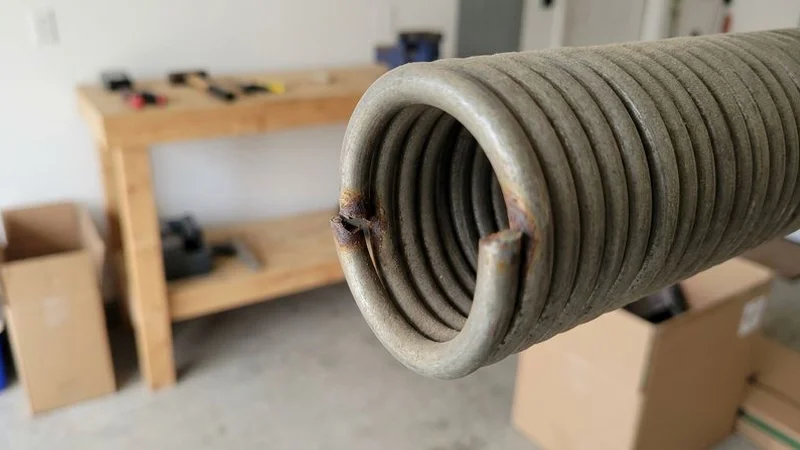
This constant pushing and pulling creates significant metal fatigue over time. The degrading steel eventually reaches a breaking point without much warning.
Pros, Cons, and Crucial Safety Warnings
We understand the initial financial appeal of this older technology. The upfront replacement cost averages a much lower $150 to $250 for professional installation in 2026.
The straightforward mechanism also makes adjusting the initial tension slightly easier for installers. We always warn folks that the lower price tag comes with serious long-term drawbacks.
Extension hardware degrades quickly. The coils rarely last beyond 10,000 cycles.
- Shorter Lifespans: Constant stretching causes rapid metal fatigue.
- Uneven Lifting: Independent side springs often cause jerky door movement.
- Dangerous Breakages: Snapped springs can fly across the garage like projectiles.
We strongly emphasize the need for safety cables on these older systems. Threading a high-strength steel cable through the center of the coil prevents a disaster.
The metal safety line stops the broken pieces from causing severe injury or vehicle damage.
Torsion vs Extension Garage Door Springs: Which Does Your Door Use?
We will always match the type your door currently uses if you simply need a direct replacement. Upgrading your entire system changes the conversation completely.
Eddie recommends torsion springs for better performance, longer life, and vastly improved safety.
The Arizona Climate Factor
We see how Arizona’s extreme heat destroys standard galvanized hardware. Torsion springs equipped with oil-tempered wire perform significantly better in a climate that regularly tops 110°F.
The oil tempering process hardens the high-carbon steel. We install this heavy-duty material to resist the heat-related thermal expansion that causes premature cracks.
In Arizona’s extreme heat, torsion springs with oil-tempered wire perform significantly better than standard springs. The oil tempering helps resist heat-related fatigue that accelerates spring failure in our climate.
Standard zinc-galvanized springs simply cannot handle the intense desert temperatures. Spending an extra $350 to $600 to convert from extension to torsion pays off through decades of reliable service.
Take Action Today
We invite you to call Eddie at (520) 965-8259 to discuss your spring replacement options. Choosing the right setup protects your family and your vehicles.
You will save money in the long run by doing it right the first time.
Our team is ready to get your garage door working smoothly again. Torsion vs Extension Garage Door Springs: Which Does Your Door Use?
Reach out today, and let a professional answer that question for you.
Eddie
Owner & Lead Technician
Eddie is the owner and lead technician at Green Valley Garage Door Repair, serving southern Arizona homeowners for over 10 years. He holds Arizona ROC License 358843 and is an exclusive installer of LiftMaster openers and Clopay garage doors.
Learn more about this service →